
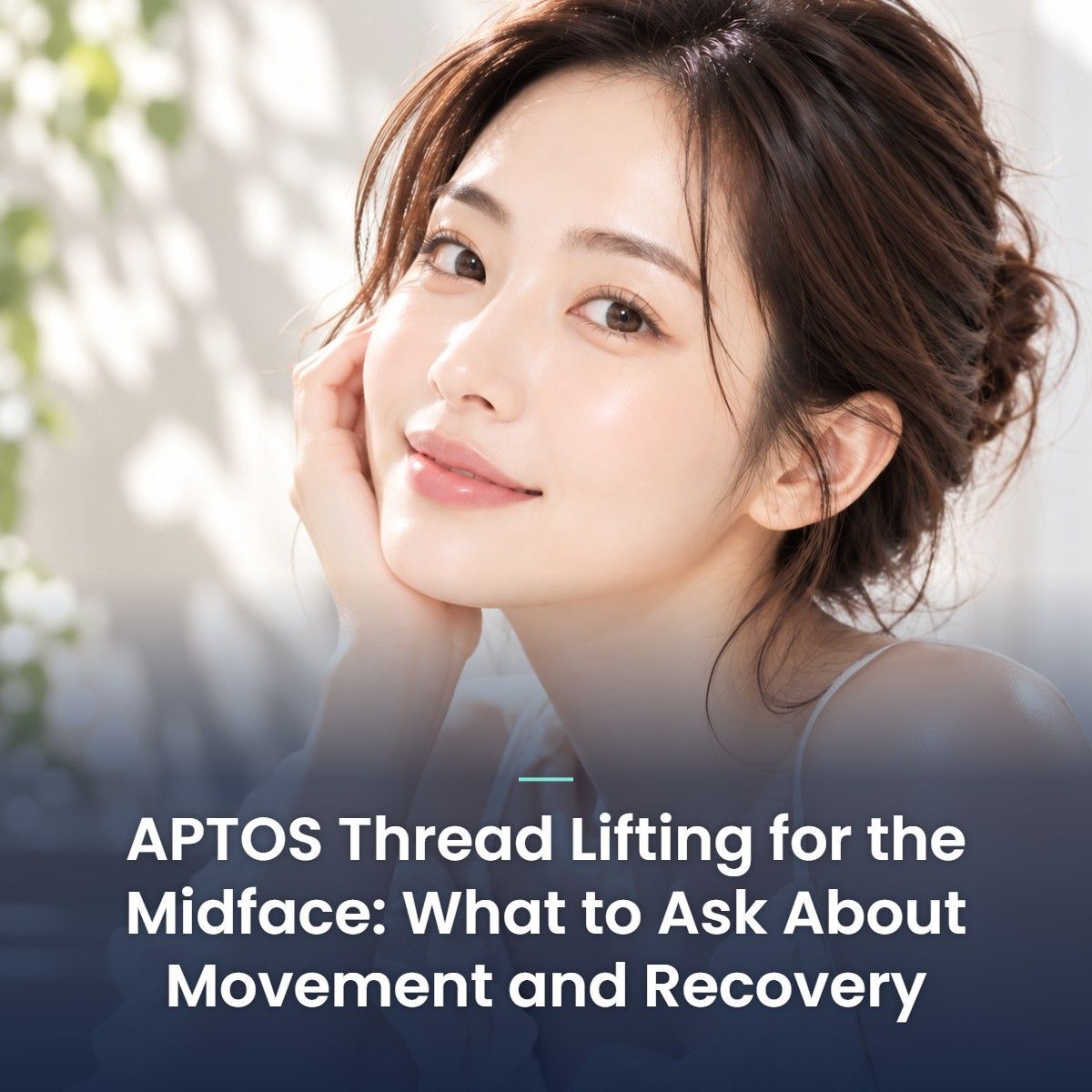
APTOS Thread Lifting for the Midface: What to Ask About Movement and Recovery
Thread lifting is often discussed when the midface begins to look lower or flatter, especially around the cheeks. APTOS is one of the thread systems people ask about. Because threads sit beneath the skin in an area that moves constantly when you talk and smile, questions about movement and recovery are especially important. This guide covers what to discuss before booking.
Key points
- Midface threads aim to reposition soft tissue and support a lifted look.
- APTOS threads are placed beneath the skin through small entry points.
- Facial movement in the early days can affect comfort and how threads settle.
- Recovery and results vary from person to person.
Why movement matters in the midface
The midface moves every time you speak, eat or smile. After threads are placed, these movements can cause temporary tightness or a sensation of pulling while the tissue settles.
Clinicians often give guidance on limiting wide mouth opening, vigorous chewing or strong facial expressions for a short period.
How APTOS threads are generally described
APTOS threads are placed under the skin using fine instruments through small entry points. Depending on the type, they may have barbs or cogs that help hold tissue in a lifted position, and some materials gradually dissolve over time.
The choice of thread type, number and placement depends on your anatomy and goals.
Who may be a candidate, and when threads may not be the right fit
Midface thread lifting is generally discussed with people who notice mild to moderate descent of the cheek tissue, such as a deepening line beside the nose or a flatter look high on the cheek, and who still have reasonable skin thickness and elasticity. Because threads act on the soft tissue, the amount of fat, the thickness of the skin and the strength of facial expression all influence planning.
A clinician may suggest a different approach if the main issue is volume loss rather than descent, if the skin is very thin or very heavy, or if expectations lean towards the kind of change usually associated with surgery. Some people with very expressive faces may also need extra discussion about how threads could feel during smiling and chewing.
Pregnancy, bleeding disorders or blood-thinning medication, active skin infections, autoimmune conditions, a tendency to heal with raised scars and recent procedures in the area should all be shared. These can affect suitability, timing and the precautions taken.
What to ask about recovery
Swelling and bruising
How long these may last and how to manage them.
Dimpling or puckering
Whether temporary irregularities are expected and how they usually resolve.
Movement restrictions
Which activities or expressions to limit, and for how long.
Sleeping position
Whether to avoid sleeping on your side for a while.
Questions worth asking at your consultation
- Am I a good candidate for midface threads? Skin thickness and tissue descent influence suitability.
- Which thread type would you use, and why? Understanding materials helps you compare options.
- How long is typical recovery? Plan work and social events accordingly.
- What should I avoid afterwards? Ask about dental work, exercise and facial massage.
- Who do I contact if something feels wrong? Know the follow-up process.
What the procedure usually involves
Treatment is generally done under local anaesthetic. Entry points are marked, threads are inserted and positioned, and the face is reviewed for symmetry. Mild discomfort, swelling and tightness are common in the first days.
Planning tip: leave a buffer before important events. Swelling and minor irregularities usually settle, but timing is easier to manage with room to spare.
Other options to discuss
If volume loss is the main cause of midface flattening, fillers or biostimulators may be considered. Energy-based lifting is another non-invasive option. Some plans combine approaches.
Aftercare, scheduling and how results are reviewed
In the days after a thread procedure, people are commonly advised to limit wide mouth opening, avoid heavy facial massage, sleep with the head slightly raised and be gentle when cleansing. Mild swelling, bruising, tightness or small irregularities at entry points can occur, and your clinician will explain what is expected and what warrants a call.
It can be sensible to plan around work, social events and travel, leaving some flexibility in case bruising or swelling takes longer to settle. Dental appointments and activities that involve stretching the face may also need to be scheduled with care, so it helps to mention them early.
Reviews are often planned once initial swelling has settled and again later, since the tissue response to threads develops over time. Consistent photos at rest and while smiling help you and your clinician look at both position and movement.
Frequently asked questions
Does thread lifting hurt?
Local anaesthetic is usually used, though some discomfort and tightness afterwards is common.
How long do results last?
This varies with thread type and individual factors.
Can threads be combined with fillers?
Sometimes. Your clinician can advise on order and timing.
Can I exercise after thread lifting?
Many people are advised to pause strenuous exercise for a short period. Your clinician will give guidance on when it is reasonable to return to your usual routine.
How should I ask about cost?
It is reasonable to ask what the procedure includes, how the number of threads is decided, and whether follow-up reviews are part of the plan. Clear answers help you weigh the option calmly.
This article is for general information only and is not medical advice. Suitability, treatment plans and results differ from person to person. Please consult a qualified medical professional about your individual situation.